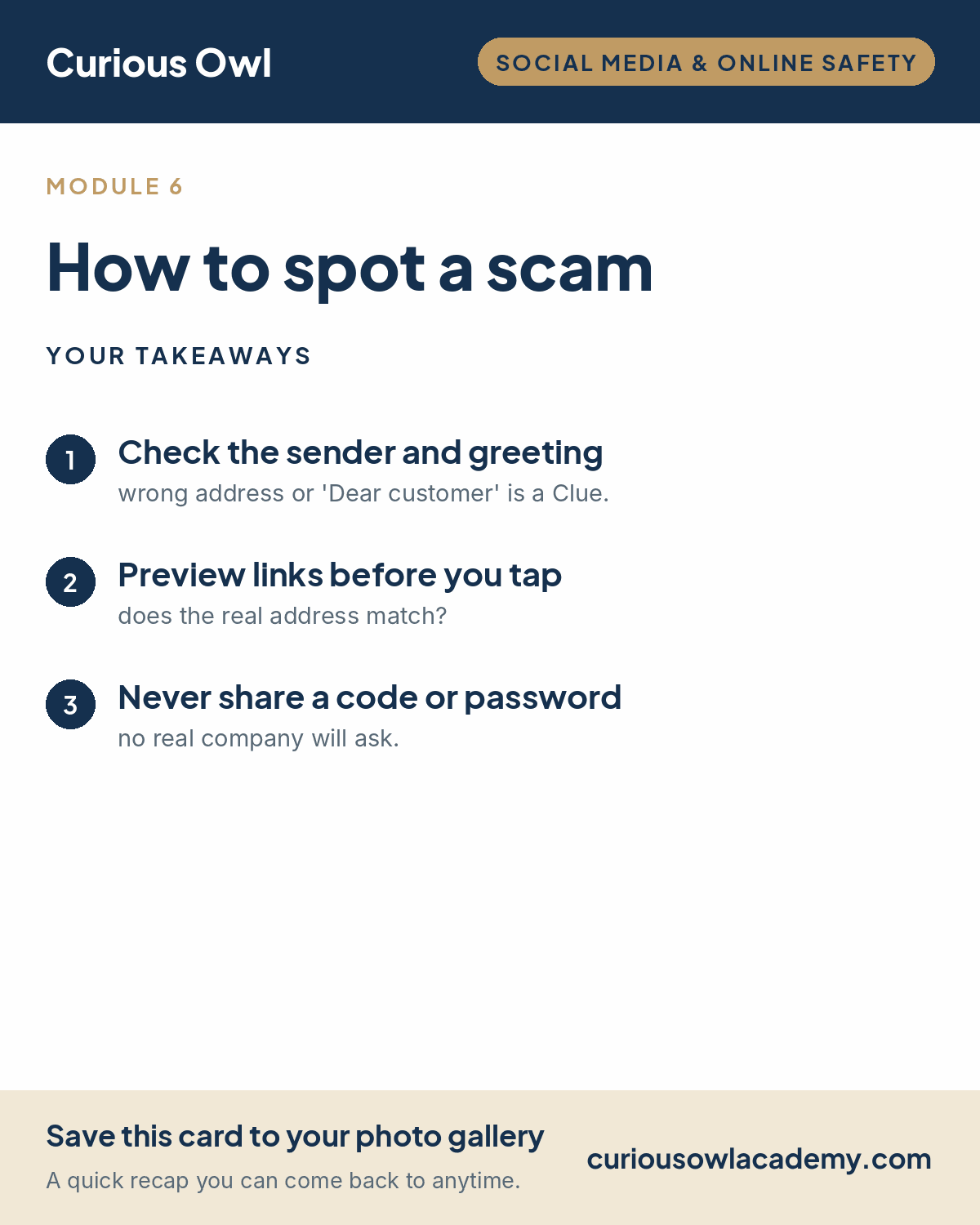
How to Spot a Scam
Same words as the lesson below. Prefer to read? Just scroll down.
Now that you know scams work by rushing your emotions, here is how to catch them in the moment. Scam messages almost always leave clues, and once you know what to look for, you spot them everywhere and they lose their power.
Check the sender first. Real organisations use proper addresses, while scams often use ones that are slightly wrong, a swapped letter, an extra number, or a name that is close but not quite right. Be suspicious of messages that greet you as ‘Dear customer’ instead of your name, and of spelling and grammar that feels off.
Look hard at links before you tap. On a computer you can hover to see where a link really goes; on a phone, press and hold to preview it. If the real address does not match the company it claims to be from, do not tap it. And never share a one-time code or password, real companies never ask for these, and anyone who does is trying to steal your account.
Tariq, 16, got a message that looked like it was from his bank, but it greeted him as ‘Dear user’ and the web address was slightly misspelled. Those clues gave it away, so he deleted and reported it instead of tapping. Run the checks: sender, greeting, spelling, link. If anything asks for a code or password, treat it as a scam every time.